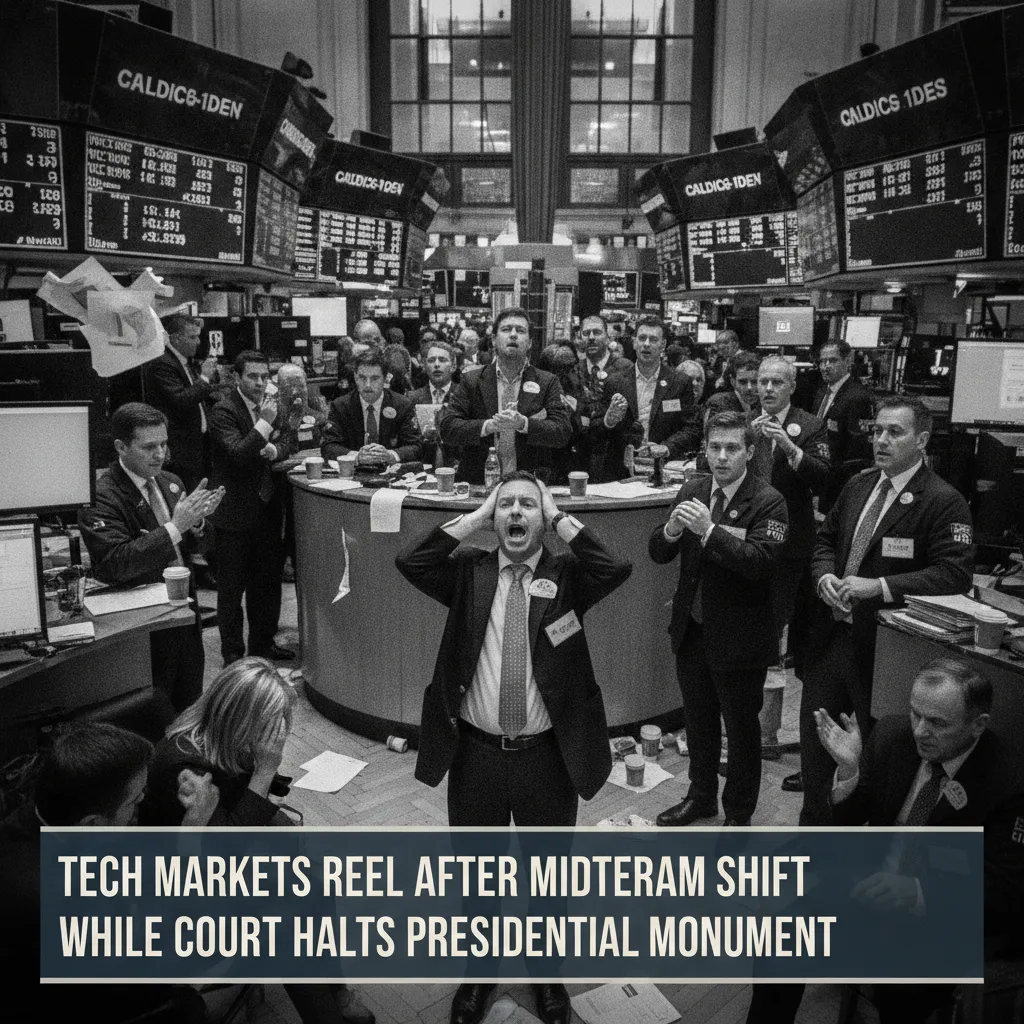
American equity markets found their footing on Friday, staging a partial recovery after a brutal session that saw artificial intelligence stocks plummet. The sudden retreat on Thursday was sparked by fears that the Democratic sweep in the midterm elections could lead to tighter regulations and a slower rollout of critical data center infrastructure. This panic triggered the Nasdaq’s worst single day in nearly two years, wiping trillions in value off the S&P 500 and leaving investors questioning if the massive AI bubble had finally begun to leak.
By Friday morning, however, confidence returned to several high profile tech names. Semiconductor giants like Advanced Micro Devices and Intel saw significant rebounds, while Nvidia also managed to climb back into positive territory. Despite this resilience, the recovery faced headwinds from a surprisingly strong October jobs report. With 165,000 new positions added and unemployment dipping to 4.1 percent, traders began betting more heavily that the Federal Reserve might maintain higher interest rates or consider a hike in December to keep inflation in check.
While U.S. markets showed strength, the global picture remained fragmented and fragile. Asian markets suffered deeply, with South Korea’s Kospi sliding over 6 percent due to heavy losses among memory chip leaders Samsung and SK Hynix. Similarly, Japan’s Nikkei 225 plummeted into bear market territory as semiconductor worries spread across the Pacific. In Europe, indices struggled to gain any real traction, reflecting a lack of big tech exposure compared to their American counterparts.
Market analysts remain split on whether this turbulence represents a temporary positioning reset or a fundamental shift in investor sentiment. Some warn that institutional players are simply locking in profits after a historic runyly run-up, while others argue that growing skepticism regarding the actual return on investment for AI spending is becoming impossible to ignore. For now, those betting on the long term suggest that unless there is clear evidence of slowing revenue growth or weakening cloud utilization, the underlying appetite for AI remains intact despite the political noise.